GYCAF – 2026 Storytelling Winners
Global Youth Climate Action Fund

2026 Storytelling Winners
Youth Climate Leadership

Three young leaders from India, Nigeria and Jamaica turned lived experience into menstrual waste solutions, clean cooking businesses and Caribbean climate technology.

Meet the winners

🇮🇳
Puja UrkudeIndia · Menstrual health and waste
🇳🇬
Abdulazeez RabiuNigeria · Clean cooking and EcoFlame
🇯🇲
Damani ThomasJamaica · Low-carbon fuel and De30
Why These Stories Matter

Climate action starts with lived experience.

GYCAF amplifies youth voices from communities on the frontlines of climate change. This year’s winners show that young people are not only advocates or beneficiaries. They are builders of practical, local solutions.

Our Impact

Stories that cross borders

16

Stories represented, 2022–2026

13

Countries represented

27 t

CO₂ avoided (estimated, Waste2Fuel in Nigeria)

2026 Winners

Three Stories, Three Countries

Menstrual Health
Maharashtra, India

From a Hostel Balcony to Climate Action

A pile of used sanitary pads in a Yavatmal hostel showed Puja that menstruation is also a waste management challenge. Today she turns that experience into community conversations.

Her workSessions with women and girls in slum and low-income communities across Maharashtra.
Read Full Story →
Clean Energy
Katsina State, Nigeria

What If the Waste Was the Solution?

Abdulazeez Rabiu founded EcoFlame and Waste2Fuel, training displaced girls to turn farm waste into clean cooking briquettes and small businesses.

Impact snapshotAn estimated 18,750 kg of firewood displaced and 27 tonnes of CO₂ avoided in six months.
Read Story →
Climate Technology
Jamaica

Building Climate Technology from the Global Energy Crisis

Damani Thomas began clean-energy research at 16 to cut Jamaica’s fossil fuel dependency. His De30 platform is a drop-in low-carbon fuel built for the vehicles and infrastructure already in place.

Where it standsMoved from early research into field testing, pilot preparation, international exposure and patent protection.
Read Story →
India · Menstrual Health and Waste

From a Hostel Balcony to Climate Action

By Puja Urkude, Maharashtra, India

Puja’s journey into climate action began on a small balcony of a Social Welfare Girls’ Hostel in Yavatmal, Maharashtra. About 82 girls lived there, with nearly ten sharing each small room. When the municipal waste vehicle refused to collect garbage mixed with sanitary pads, the girls were told to store the pads separately and burn them later.

Community conversations on menstrual health and waste across Maharashtra.

The pile grew, and in the rainy season it became unbearable. One Sunday, Puja carried a bag downstairs to burn it. A neighbor came out upset about the smoke and smell entering her home. Puja apologized, put out the fire and returned to her room with questions she could not answer.

If we could not throw sanitary pads into the garbage, and we could not burn them either, then what were we supposed to do?

That day she realized menstruation was not only a health issue. It was an environmental and waste management challenge, and young women were left to solve it alone. Friends introduced her to menstrual cups. She hesitated for months, then tried one and found it empowering, affordable and convenient.

From personal struggle to mission

During her postgraduate studies, Puja joined Reap Benefit and became a Solve Ninja, working on menstrual health, environmental impact and sustainable alternatives. Today she works with women and adolescent girls from slum communities, marginalized populations and low-income settlements across Maharashtra.

Through awareness sessions and peer learning, she helps women talk about affordability, disposal, stigma and misinformation. Her own story is what opens the conversation: women relate to lived experience more than statistics.

Climate action is about creating systems that are practical, inclusive and dignified, so women do not have to choose between their health and the environment.
Nigeria · Clean Energy

What If the Waste Was the Solution?

By Abdulazeez Rabiu, 26, founder of EcoFlame Sustainable Energy Initiative

Abdulazeez grew up in Bakori, Katsina State, watching two crises unfold together. Households cut down surrounding woodlands because they had no other way to cook, which fed deforestation and degraded soil. As pasture and water shrank, conflict between herders and farmers displaced thousands of families.

The women and girls who lost everything were soon walking long distances for firewood. Meanwhile, farmers were burning rice husks, maize stalks and sugarcane bagasse as waste. With a borrowed classroom and one question, he began the pilot that became Waste2Fuel.

A rough start, a real market

In May 2025, Waste2Fuel 1.0 trained 80 secondary school girls on a $200 budget. The first briquettes crumbled, and only 12 girls began producing and selling. Then a customer named Mairo, a mother of six, came back the next week because briquettes were cheaper than firewood. She brought her neighbor.

Three young entrepreneurs

Zainab, 24, fled to Bakori after her father was killed in 2021. With a locally built press and kiln, and free molasses as a binder, she was earning ₦40,000–₦45,000 a month by October 2025.

Khadija arrived quiet and reserved, then became the person classmates turned to. She is now joining EcoFlame’s facilitator team to train others.

Binta sold to poultry farmers who use briquettes to keep chicks warm. She also noticed that customers’ stoves did not fit the briquettes. Her feedback led to the insulated clay-liner cookstove now central to the GIRL-ENERGY curriculum.

Binta with EcoFlame briquettes.

“Before the training, I depended entirely on government support. Now I earn from my own work.” — Zainab

Where EcoFlame is now

In April 2026, supported by the EU Youth Empowerment Fund, Waste2Fuel 2.0 trained 100 girls using equipment built by a local artisan. Five teachers now deliver the curriculum independently. EcoFlame is building GIRL-ENERGY, a 12-week programme for 40 out-of-school displaced girls covering climate basics, briquette production, clay cookstove liners, enterprise management and community leadership.

12girls running businesses from the first pilot
18,750 kgfirewood displaced (estimated)
27 tCO₂ emissions avoided (estimated)
EcoFlame didn’t rescue these girls. We gave them a tool and got out of their way.
Jamaica · Climate Technology

Building Climate Technology from the Global Energy Crisis

By Damani Thomas, Jamaica

Damani was in high school when he began to understand Jamaica’s dependence on imported fossil fuels. He first noticed it through price: when fuel rose, taxis, groceries, electricity, school transport and household decisions all felt it. Jamaica was not simply paying for fuel. It was exposed to a global energy system it did not control.

For small island developing states, the climate crisis is also measured in dependency.

He did not want only to talk about the problem. At sixteen he began clean-energy research aimed at reducing fossil fuel dependency without pretending Jamaica could replace its entire transport and fuel infrastructure overnight. He designed for the vehicles already on the road, the fuel systems already in place and the economic limits that shape real adoption.

Carbon Neutral Initiative and De30

De30 is a drop-in low-carbon fuel platform that works through existing fuel infrastructure. Its first focus is blended bio-petrol for road transport, using higher alcohol-based components for cleaner combustion without replacing vehicles, engines or distribution systems. The platform also opens pathways toward sustainable aviation fuel, marine fuel and diesel alternatives, using ethanol, agricultural residues and waste-derived alcohols.

Public transport, taxis, logistics, farming, tourism and small businesses in Jamaica still run on liquid fuels. Damani wanted De30 to meet that infrastructure where it is and build a bridge to lower-carbon systems, rather than protect the future only for people who can change everything quickly.

Damani Thomas holding a flask of De30 fuel in a laboratory

Damani Thomas with De30 samples in the lab.

Building from Jamaica has not been easy

Damani had to learn chemistry, fuel systems, patent strategy and business development, and to explain a technical platform to people not always ready to believe serious energy innovation could come from a young Jamaican founder. Funding, laboratory access and validation pathways were limited at every stage.

Awareness does not certify fuels. It does not finance pilots, build laboratories or unlock refinery partnerships.

His message to the world is that youth climate leadership must be supported with equipment, certification, pilot partners and patient capital, so that young people can work as builders, researchers, founders and inventors.

Where De30 stands

The work has moved from early research into field testing, pilot preparation, international exposure and patent protection. The deeper purpose, he says, is proving that a young scientist from Jamaica can look at a global energy crisis and contribute something serious.

I began because I wanted Jamaica to lower fossil fuel dependency and build climate technology, not just wait for it. I continue because the countries most exposed to the crisis should also have the power to shape the solutions.
From Our Archive

Past Youth Climate Stories

2025 Winners

The three Youth Climate Stories winners of 2025.

CNCharles Nteranya Baraka2025 Winner
Democratic Republic of Congo · Kilimo Green Farm

From Soil to Hope

Charles Nteranya Baraka

Growing up in Bukavu beside Lake Kivu, Charles saw erratic rainfall and soil degradation threaten the farming his community depends on.

Read full story →
JKJohnmary Kavuma2025 Winner
Uganda · Upcycle Africa

Turning Waste to Worth

Johnmary Kavuma

Johnmary grew up in poverty, in a home surrounded by drains clogged with plastic waste, and set out to turn that waste into value.

Read full story →
TTTharya Tambra2025 Winner
Peru · Ollas Sostenibles

Fighting Hunger with Sustainability

Tharya Tambra

In 2020 a young engineer found that donations to Peru’s emergency community kitchens were not reaching the people who needed them most.

Read full story →

2022 Winners

The two final winners of the 2022 storytelling campaign.

NNNam Nguyen2022 Winner
Vietnam

Climate Story

Nam Nguyen

Nam begins with the question every graduating student faces: what will I do after this?

Read full story →
CAColeen Awit2022 Winner
Philippines · Sagup Negros

Food Waste Mitigation Initiative

Coleen Awit

Coleen is a chemical engineering graduate of the University of St. La Salle behind the Sagup Negros food waste initiative.

Read full story →

Also Featured in 2022

Other stories we published during the 2022 campaign.

MAMishra Ayadi2022 Featured
India

Your Bin Man Knows You Best

Mishra Ayadi

A walk home in Mumbai introduces Gujju, whose family sells scrap and rag-picks beneath Dadar Station bridge.

Read full story →
IA2022 Featured
Kenya

Dryland Agroforestry in the Face of Climate Change

Ibrahim Ahmed

Dryland regions cover up to 80% of Kenya, where low rainfall and drought strain pastoral and agro-pastoral livelihoods.

Read full story →
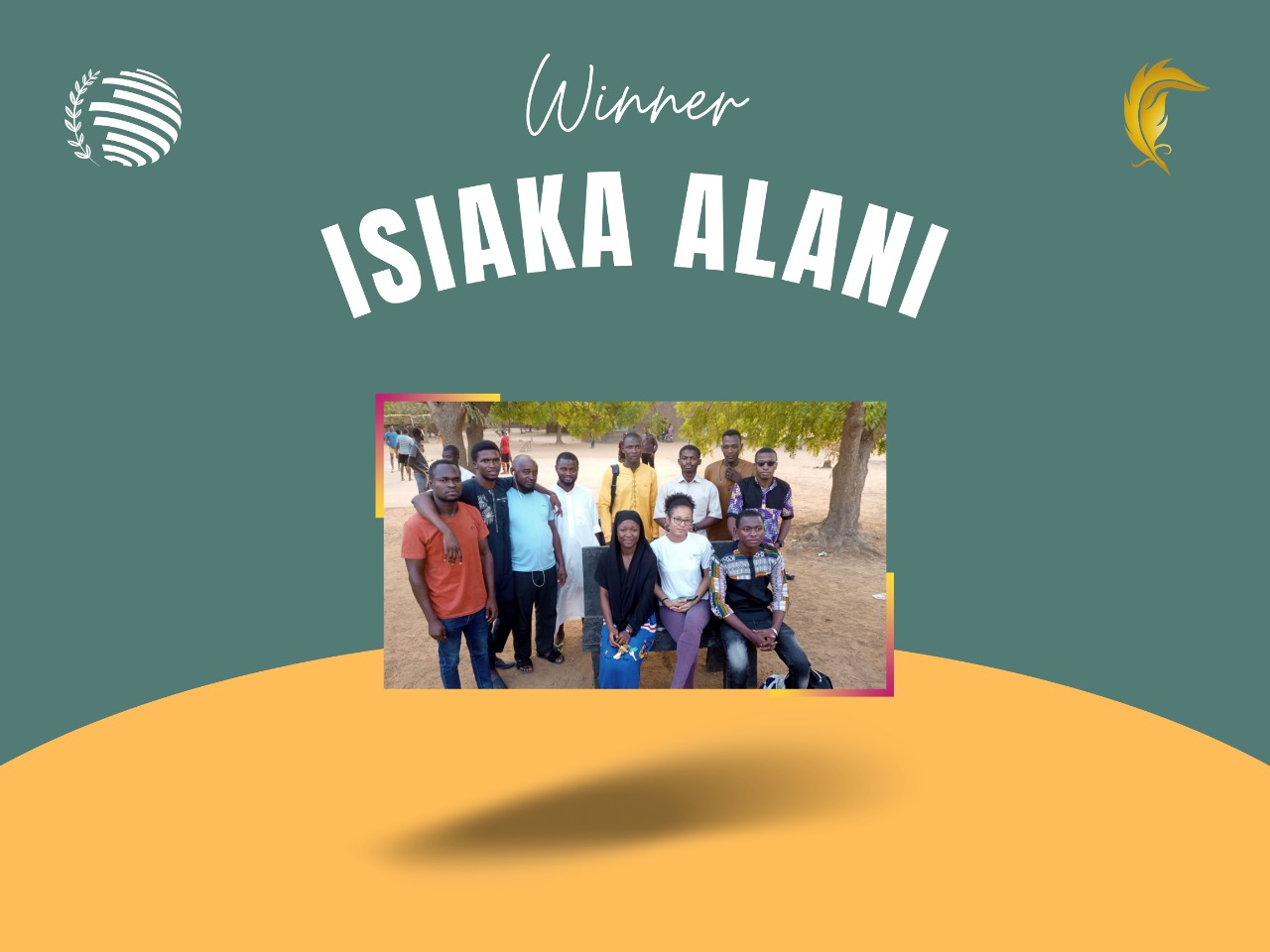
IAIsiaka Alani2022 Featured
Niger · Climate Innovation Hub

Climate Innovation: From Waste to Potential

Isiaka Alani

A community of young researchers, founded in March 2022, working on innovation for climate change and the energy transition.

Read full story →
AGAnjalee Gunarathna2022 Featured
Sri Lanka

Youth Climate Story

Anjalee Gunarathna

Read the full story on the GYCAF website.

Read full story →
SM2022 Featured
Kenya

The Climate Change Politics

Steve Misati

A story about why people often feel too overwhelmed by climate change to worry about it.

Read full story →
LLLetsatsi Lekhooa2022 Featured
Lesotho

Youth Climate Story

Letsatsi Lekhooa

Read the full story on the GYCAF website.

Read full story →
LNLucy Ngari2022 Featured
Kenya

My Conservation Story as a Woman in Kenya

Lucy Ngari

Lucy’s passion for the environment began in childhood, watching doves and praying mantises in a nearby forest.

Read full story →
MAMaría Alejandra Téllez2022 Featured
Colombia

Leadership as a Treasure to Cultivate

María Alejandra Téllez

A lawyer and social entrepreneur reflects on leadership and her years as a co-founder.

Read full story →
Global Reach

Thirteen countries, one message: young people are building solutions.

Youth Climate Stories from 2022 to 2026 span Africa, Asia, Latin America and the Caribbean.

Democratic Republic of CongoColombiaIndiaJamaicaKenyaSri LankaLesothoNigerNigeriaPeruPhilippinesUgandaVietnamIndiaNigeriaJamaicaDemocratic Republic of CongoUgandaPeruKenyaNigerSri LankaLesothoColombiaVietnamPhilippines

Select a country on the map to jump to its card.

India

Puja Urkude (2026) and Mishra Ayadi (2022): menstrual waste and the lives of waste pickers.

2022 · 2026

Nigeria

Abdulazeez Rabiu (2026): clean cooking fuel from agricultural waste in Katsina State.

2026

Jamaica

Damani Thomas (2026): De30, a drop-in low-carbon fuel.

2026

Democratic Republic of Congo

Charles Nteranya Baraka (2025): climate-smart farming with Kilimo Green Farm.

2025

Uganda

Johnmary Kavuma (2025): turning plastic waste into value with Upcycle Africa.

2025

Peru

Tharya Tambra (2025): fighting hunger through Ollas Sostenibles.

2025

Kenya

Ibrahim Ahmed, Steve Misati and Lucy Ngari (2022): drylands, climate politics and conservation.

2022

Niger

Isiaka Alani (2022): the Climate Innovation Hub.

2022

Sri Lanka

Anjalee Gunarathna (2022).

2022

Lesotho

Letsatsi Lekhooa (2022).

2022

Colombia

María Alejandra Téllez (2022): leadership and social entrepreneurship.

2022

Vietnam

Nam Nguyen (2022): a 2022 winner.

2022

Philippines

Coleen Awit (2022): a 2022 winner with Sagup Negros.

2022
Join The Movement

Help amplify youth voices driving climate solutions worldwide.

Whether through partnerships, funding, storytelling or volunteering, every contribution helps empower the next generation of climate leaders.

Save to list

Scroll to Top